Movement- Bridging thought, into action ��
The holistic human 28 day movement challenge.

I believe most people know the importance of eating right and exercise
That movement is “good for them.”
what they struggle with, is
where movement fits in a life that already feels full, demanding, and often... depleted.
In my work with professionals, founders, and leaders, I rarely hear,
“I don’t care about my health.”
What I hear instead is:
·“I don’t have the time.”
“I don’t know what to do”
“I start, then I stop.”
“It’s hard to stay consistent
“I’m afraid this will make things worse.”
It’s easy to blame the lack of motivation, but I believe it’s something more systemic.
Constraints.
And working around them is what this upcoming challenge will be about.
First, we deal with some mindset pieces
1) The “all or nothing rule.“
“If I can’t do it well, I might as well not start!”
Well, rejoice!
Because small, intentional movement matters far more than we’ve been led to believe.
Why “A Little” Movement Works
Small, consistent movement does several things at once:
·It improves circulation, which directly affects brain function and energy
It stimulates proprioception, helping the brain feel safer in the body
It reduces inflammatory load over time
It regulates stress hormones more effectively than sporadic intense workouts
It slowly expands your capacity
When movement feels achievable, the body stops bracing.
And when the body stops bracing, healing and strength follow.
This is especially important for people dealing with:
·
chronic pain
post-injury recovery
post-surgery adaptation
long-term stress or burnout
Consistency? It comes from feeling that It’s simple, doable, achievable and safe.
It doesn’t need to be impressive. It needs to be repeatable.
Five minutes done daily will outperform an hour done once every two weeks — not just physically, but psychologically.
The brain learns: “I show up.” “I finish what I start.” “My body responds when I care for it.”
That confidence spills into everything else.
2)The Body Is Not a Side Project
We tend to treat the body like an accessory to the “real work” of life.
Meetings, decisions, caregiving, leadership, problem-solving, deadlines — those get priority. The body gets whatever time is left over.
But the body isn’t separate from:
how clearly you think
how regulated your emotions are
how resilient you feel under pressure
how patient or reactive you become
how much energy you have to follow through
When the body is depleted, everything else quietly pays the price.
Not dramatically at first. Subtly. Gradually. Cumulatively.
Then, fatigue, lethargy, illness.
Movement regulates far more than muscles.
It regulates:
>Mood
>sleep quality
>digestion
>emotional reactivity
>focus and decision-making
Short, daily movement acts like a reset button for the nervous system.
Last but not least, it modulates
pain perception
3) Pain Is Information, what we do with it matters
One of the most damaging ideas in modern fitness culture is that discomfort automatically equals progress.
For some bodies, at some stages, that may be true.
For many others, especially bodies that have been injured, overworked, or ignored for years, pain is simply the nervous system saying: this is too much, too fast.
Listening to the body is a skill.
Learning how to move with your current capacity — not trudging through despite it — is how you create momentum that actually lasts.
Why I’m Running a 28-Day Movement Challenge
I’m a medical doctor. I’m also an acupuncturist, hypnotherapist, and trauma-informed holistic practitioner.
I’ve completed endurance events. I’ve hit physique goals. And I’m currently recovering from a major fracture, adapting my training in real time.
What I share will not be theory. It’ll be lived experience, warts and pimples included.
You’ll see setbacks, recalibration, and patience.
This round, unlike before, I won’t be pushing limits, I’ll be rebuilding capacity.
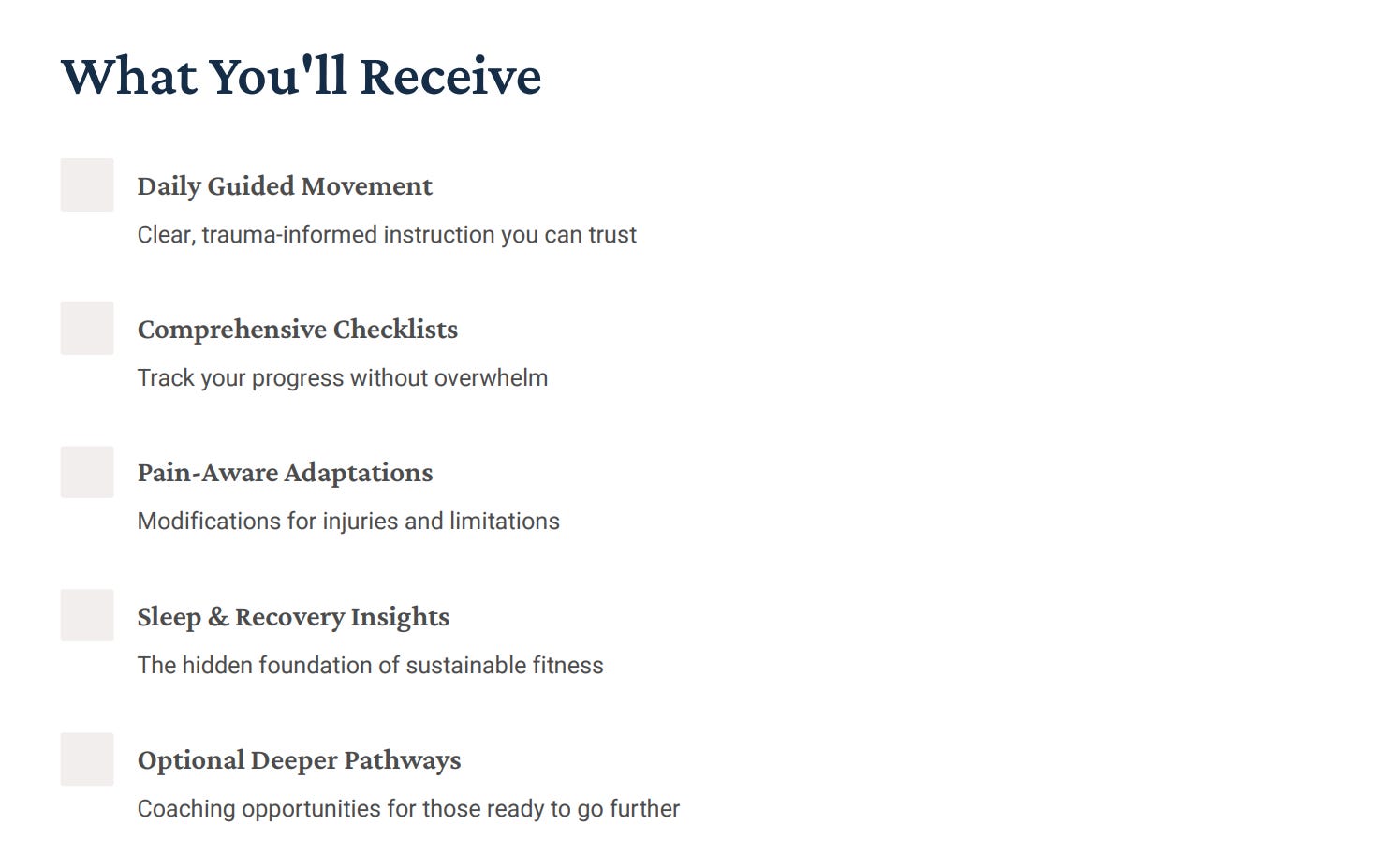
Over 28 days, participants are guided through short, daily movement practices designed for real lives:
>minimal equipment
>busy schedules
>pain-aware adaptations
The framework is simple but intentional:
Strength — functional power to move, being able to do more
Stamina — not feeling out of breath all the time·
Stability — posture, balance, - This, done right, Cures pain·
Stretch — mobility, injury prevention, ahhh... relief
Sustainability — sleep, diet, recovery
And We’re not chasing perfection. Participation matters more than performance.
Who This Is For — And Who It Isn’t
This is for people who:
want to feel stronger, clearer, and calmer
know health matters but struggle with consistency
are managing pain, injury, or chronic conditions
want accountability and companionship
are ready to take charge of their own health
This isn’t for people looking for shortcuts, or results without participation.
Sometimes Consistency is the work. And it’s also the reward- belief in yourself that you can do it!
A Final Thought
I won’t daydream that I will rebuild health in one heroic effort.
but I know I can rebuild by showing up, steadily consistently.
through my pain, suffering and Injuries-
I have learnt to listen to my body, and to pace how to push.
As we’ve seen., small movement is not insignificant.
Critically, when you stop outsourcing your wellbeing — when you start working with your body instead of overriding it — everything else in life becomes easier to hold.
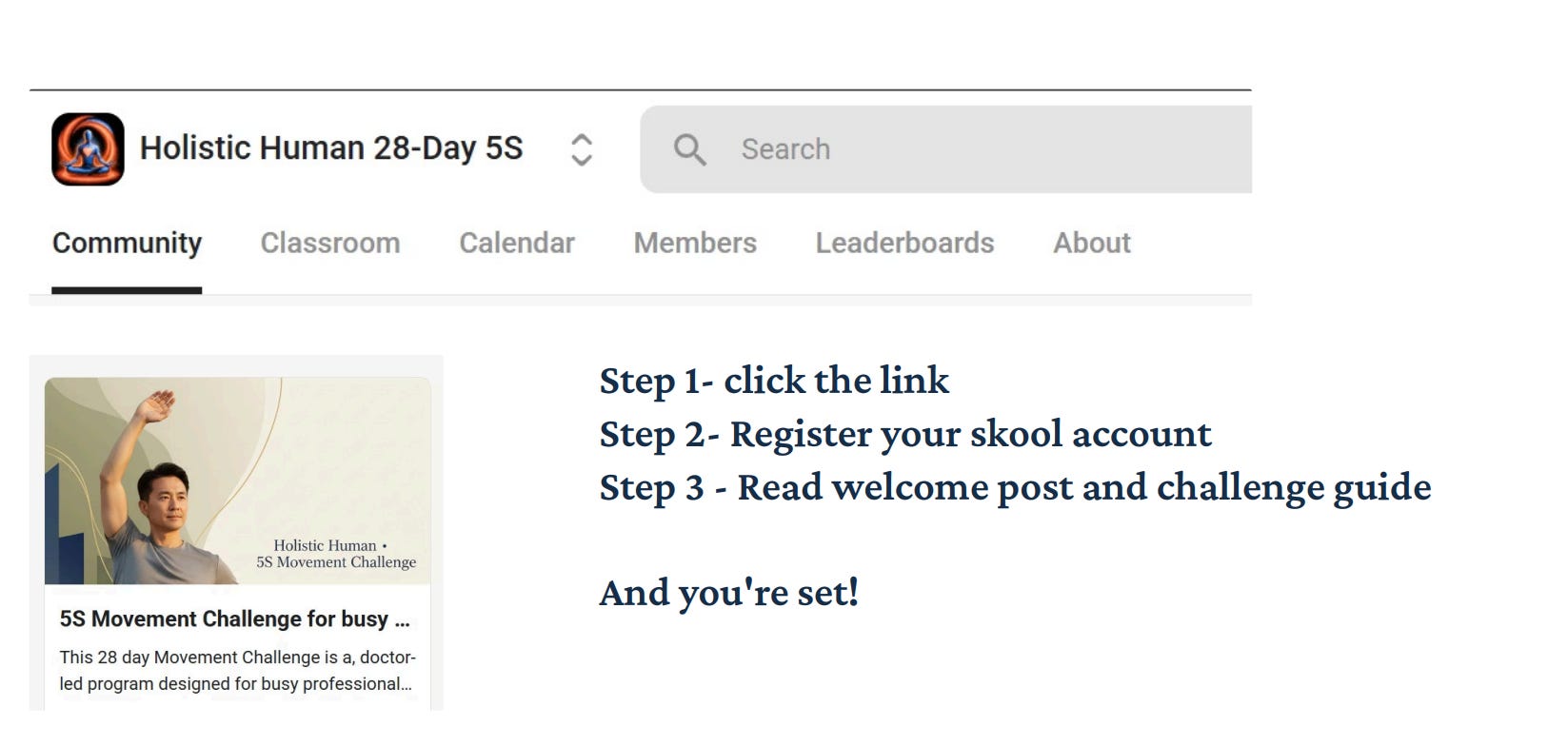
If this resonates, I’ll see you inside the challenge. Here’s how